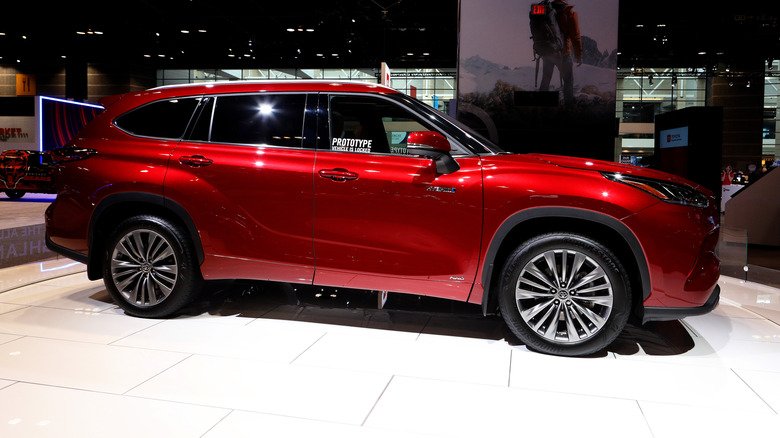
The Fourth Generation Toyota Highlander (2020-Present) arrived on the scene with a mission: to redefine the family-friendly, three-row crossover SUV. Moving beyond its well-established legacy, this generation introduced a fresh platform, bold new styling, and a significant tech overhaul, aiming to keep pace in an increasingly competitive segment. It wasn't just an evolution; it was a transformation designed to offer more of everything discerning families demand—comfort, capability, and cutting-edge features.
Since its debut for the 2020 model year, the fourth-gen Highlander has evolved, notably swapping out its venerable V6 engine for a more modern turbocharged four-cylinder in 2023. This change, alongside a robust hybrid option, solidified its position as a versatile choice for those needing practicality without sacrificing efficiency or sophistication.
At a Glance: Fourth Generation Toyota Highlander (2020-Present)
- Platform: Built on the Toyota New Global Architecture (TNGA-K) for improved ride, handling, and safety.
- Initial Power: Launched with a powerful 295-hp 3.5L V6 engine.
- Engine Update (2023): Switched to a 265-hp 2.4L turbocharged four-cylinder, offering more torque and better fuel efficiency.
- Hybrid Option: Continuously offers a highly efficient 2.5L four-cylinder hybrid powertrain (243 total hp, up to 36 mpg combined).
- Standard Tech: Apple CarPlay, Android Auto, Amazon Alexa compatibility, and Toyota Safety Sense (TSS 2.0/2.5+) across all trims.
- Interior Growth: Increased cargo space and improved cabin materials, with available 12.3-inch touchscreens and digital instrument clusters.
- Key Design: More angular and aggressive exterior styling compared to previous generations.
The Foundation: A New Architecture for a Modern Era
When the fourth-generation Highlander debuted, it wasn't just a facelift; it was a fundamental re-engineering. Toyota moved the Highlander onto its highly adaptable TNGA-K platform, which underpins many of its modern vehicles, including the Camry and RAV4. This shift brought tangible benefits that drivers immediately notice.
The TNGA-K platform allowed for a lower center of gravity, a stiffer chassis, and a more refined independent suspension. What does this mean for you? A more composed and comfortable ride, improved handling dynamics, and enhanced crash protection. This structural upgrade laid the groundwork for the Highlander to feel more premium and connected to the road, a stark contrast to the truck-like feel of some traditional SUVs.
Visually, the fourth-gen Highlander shed some of its softer, more rounded edges for a sharper, more athletic look. It features a bold, trapezoidal grille, sculpted side panels, and sleeker LED lighting, giving it a more confident stance. Inside, the design philosophy continued with a focus on higher-quality materials, better ergonomics, and a more integrated dash design, marking a clear step up in cabin ambiance.
Powertrains Evolve: From V6 Power to Turbo Efficiency
One of the most defining aspects of the fourth-generation Highlander's journey has been its powertrain evolution. Toyota consistently balances power, efficiency, and emissions targets, leading to some notable changes.
The Dependable V6 (2020-2022 Model Years)
Initially, the standard engine was a familiar and well-regarded 3.5-liter V6, producing a healthy 295 horsepower and 263 lb-ft of torque. Paired with a smooth-shifting eight-speed automatic transmission, this powertrain offered confident acceleration and ample power for highway cruising and towing up to 5,000 pounds. It was a proven workhorse, beloved for its reliability and smooth operation. For many, this V6 represented the quintessential Highlander driving experience.
The Hybrid Advantage (2020-Present)
For those prioritizing fuel economy, the Highlander Hybrid truly shined from the outset. Instead of a V6, it utilized a 2.5-liter four-cylinder engine paired with two electric motors (three for AWD models) to produce a combined 243 horsepower. While less potent than the V6 on paper, its electric assist provided immediate torque and impressive efficiency. With a continuously variable transmission (CVT), the Highlander Hybrid achieved an estimated 36 mpg combined for FWD models, a significant advantage over its gasoline counterparts and many rivals. This option quickly became a standout feature for environmentally conscious families or those with long commutes.
The Big Shift: Turbocharged Four-Cylinder Takes Over (2023-Present)
For the 2023 model year, Toyota made a significant engineering decision: the long-standing V6 was replaced by an all-new 2.4-liter turbocharged four-cylinder engine. This move was primarily driven by increasing global emissions and fuel efficiency standards.
The new turbo engine produces 265 horsepower, a slight drop from the V6, but it boasts a robust 310 lb-ft of torque, a notable increase. This extra torque, available at lower RPMs, translates to more responsive acceleration from a stop and improved passing power, particularly when the vehicle is loaded. It’s still mated to the eight-speed automatic transmission and maintains the 5,000-pound towing capacity. Crucially, it also offers a modest improvement in fuel economy over the V6, typically around 2-3 mpg combined. This strategic shift underscores Toyota's commitment to optimizing performance while meeting modern environmental demands.
Tech-Forward Cabin: Connectivity and Convenience at Your Fingertips
The fourth-generation Highlander marked a massive leap forward in in-car technology and connectivity. For the first time, essential features like Apple CarPlay, Android Auto, and Amazon Alexa compatibility became standard across the lineup, ensuring seamless smartphone integration for virtually every driver.
The infotainment system centered around an 8-inch touchscreen on lower trims, with a larger, more immersive 12.3-inch touchscreen available on higher trims (and becoming standard on Limited and Platinum models from 2023). This larger screen offers crisp graphics, intuitive menus, and splitscreen capabilities for navigation and media. Beyond the screens, you'll find:
- Tri-Zone Automatic Climate Control: Standard across all models, allowing driver, front passenger, and rear occupants to set their preferred temperatures.
- Available JBL Premium Audio System: For audiophiles, this upgraded system delivers exceptional sound quality.
- Qi-Compatible Wireless Smartphone Charging: Conveniently located to keep your devices powered up without cables.
- Digital Instrument Cluster: From 2023, Limited and Platinum trims received a 12.3-inch digital gauge cluster, offering customizable displays and a modern aesthetic.
- Connected Services: Options for Wi-Fi Connect, Remote Connect, Safety Connect, and Service Connect enhance the ownership experience with features like vehicle monitoring and emergency assistance.
These technological enhancements ensure the Highlander remains competitive, providing the digital tools and comforts that modern families expect in their daily drives.
Safety First: Toyota Safety Sense 2.0 and Beyond
Toyota has long been a leader in standardizing advanced safety features, and the fourth-generation Highlander continues this tradition with its comprehensive Toyota Safety Sense (TSS) suite. Initially launched with TSS 2.0, this system has seen iterative improvements (now TSS 2.5+ on newer models) to provide an impressive array of driver assistance technologies.
Standard features across all trims include:
- Pre-Collision System with Pedestrian Detection: Helps detect vehicles, pedestrians, and cyclists and can provide braking assistance.
- Full-Speed Range Dynamic Radar Cruise Control: Maintains a set distance from the vehicle ahead, even in stop-and-go traffic.
- Lane Departure Alert with Steering Assist: Warns if you're drifting out of your lane and can gently steer you back.
- Lane Tracing Assist: Works with adaptive cruise control to help keep the vehicle centered in its lane on highways.
- Automatic High Beams: Automatically switches between high and low beams based on oncoming traffic and road conditions.
- Road Sign Assist: Detects certain road signs (like speed limits) and displays them on the multi-information display.
Beyond TSS, the Highlander comes with ten airbags, a backup camera with projected path, and available features like a Blind Spot Monitor with Rear Cross-Traffic Alert, and a Bird's Eye View Camera for easier parking. This robust safety suite provides an invaluable layer of protection and peace of mind for families on the road.
Trim Levels and Drivetrain Options: Tailored to Your Needs
The Highlander is offered in a range of trim levels, each building on the last to offer increasing levels of comfort, convenience, and luxury. While the base "L" trim was discontinued for 2024, the lineup typically includes:
- LE: The entry point, well-equipped with TSS, 8-inch touchscreen, tri-zone climate, and LED headlights.
- XLE: Adds more comfort with SofTex-trimmed seats, heated front seats, a power moonroof, and a hands-free power liftgate.
- XSE: The sportier option, featuring a unique front fascia, sport-tuned suspension, 20-inch wheels, and ambient interior lighting. (Added in 2021).
- Limited: Elevates luxury with leather-trimmed seats, ventilated front seats, a JBL audio system, and a 12.3-inch touchscreen.
- Platinum: The top-tier, offering a panoramic glass roof, heated second-row seats, a digital rearview mirror, and a head-up display.
Drivetrain options include standard Front-Wheel Drive (FWD) or available All-Wheel Drive (AWD). Toyota offers two types of AWD for gasoline models: a standard system on lower trims and Dynamic Torque Vectoring AWD on XSE, Limited, and Platinum trims. This advanced system can send up to 50% of engine torque to the rear wheels and then further distribute it between the left and right rear wheels, enhancing traction and handling in various conditions. For hybrid models, AWD is typically achieved via an additional electric motor driving the rear wheels.
For the 2025 model year, Toyota is further simplifying choices by making AWD standard on XSE and Platinum gasoline models, and across the entire Highlander Hybrid range, reflecting a growing consumer preference for enhanced all-weather capability. For a deeper dive into the Highlander's journey through the years, you might find our article on Toyota Highlander generations particularly insightful.
Practicality and Passenger Comfort: Designed for Family Life
The fourth-generation Highlander was meticulously designed with family life in mind. It offers seating for seven or eight passengers, depending on whether you choose second-row captain's chairs or a bench seat.
- Third-Row Space: While improved over previous generations, the Highlander's third row is best suited for children or smaller adults on shorter trips. It offers approximately 16 cubic feet of cargo space behind the third row, which is enough for groceries or a few duffel bags.
- Cargo Versatility: With the third row folded flat, cargo capacity expands significantly to about 48.4 cubic feet. Folding both the second and third rows opens up a cavernous 84.3 cubic feet, making it capable of hauling larger items for weekend projects or family adventures.
- Smart Storage: Throughout the cabin, you'll find clever storage solutions, including a large center console, multiple cup holders, and shelves integrated into the dashboard, ensuring every passenger has a place for their essentials.
- Second-Row Comfort: The sliding and reclining second-row seats offer ample legroom and comfort, particularly with the optional captain's chairs which provide individual space and easier access to the third row.
Ultimately, the Highlander strikes a balance between exterior size and interior utility, aiming to be maneuverable in urban environments while still providing sufficient space for most family needs.
Living with the Fourth-Gen Highlander: What to Expect
Owning and driving a fourth-generation Highlander is, for most, a predictable and pleasant experience.
- Driving Experience: Expect a refined and composed ride. The Highlander isn't a sports car, nor does it pretend to be. Its focus is on comfort and stability, soaking up road imperfections with ease. Handling is secure and predictable, making it easy to drive daily.
- Fuel Economy: This varies significantly by powertrain. The V6 (2020-2022) typically achieved around 23 mpg combined. The new turbo-four (2023-Present) improves slightly, often reaching 24-25 mpg combined. The hybrid model is the clear winner, consistently delivering 35-36 mpg combined, making it one of the most efficient three-row SUVs on the market.
- Reliability and Maintenance: Toyota's reputation for long-term reliability is a cornerstone of the Highlander's appeal. Routine maintenance is straightforward, and parts are readily available. The new turbo-four engine is still relatively new but uses proven Toyota technology, while the hybrid system has a long track record of durability.
- Noise and Vibration: The cabin is generally quiet, especially at highway speeds, thanks to good sound insulation. The V6 was famously smooth, and while the turbo-four can be a bit gruffer under hard acceleration, it generally operates quietly. The hybrid powertrain seamlessly transitions between electric and gasoline power, with the CVT keeping engine revs low.
Updates Through the Years (2021-2025)
Toyota has consistently refined the fourth-gen Highlander since its launch, rolling out meaningful updates each model year.
- 2021: Introduced the sporty XSE trim, featuring a more aggressive grille, unique lower bumper, and a sport-tuned suspension for a slightly firmer ride and more responsive handling.
- 2022: Saw the debut of the Highlander Hybrid Bronze Edition, which added distinct 18-inch bronze wheels, bronze interior accents, and unique floor mats, offering a stylish aesthetic package.
- 2023: The most significant update, replacing the 3.5L V6 with the 2.4L turbocharged four-cylinder engine. This year also made the 12.3-inch digital instrument cluster and the larger 12.3-inch multimedia touchscreen standard on Limited and Platinum trims.
- 2024: The base L trim was discontinued, making the LE the new entry-level model, slightly raising the starting price but also increasing the standard feature set.
- 2025: Toyota announced that All-Wheel Drive will become standard on XSE and Platinum gasoline models. Even more notably, AWD will become standard across the entire Highlander Hybrid range, and the LE hybrid trim will be removed, streamlining options and enhancing capability for all hybrid buyers.
These updates demonstrate Toyota's commitment to keeping the Highlander fresh, competitive, and responsive to evolving consumer demands and regulatory requirements.
Is the Fourth-Gen Highlander Right for You?
The Fourth Generation Toyota Highlander makes a compelling case for families, whether you're shuttling kids to school, embarking on cross-country road trips, or simply navigating daily life. It's an excellent choice if you:
- Prioritize reliability and resale value: Toyota's reputation is a major draw.
- Need three rows of seating: While the third row isn't expansive, it's perfect for kids or occasional adult use.
- Value safety: The standard TSS suite provides peace of mind.
- Seek fuel efficiency: The hybrid model stands out in its class for economy.
- Appreciate modern tech and connectivity: Standard Apple CarPlay/Android Auto and large available screens keep you connected.
- Desire a comfortable and composed ride: The TNGA-K platform delivers a refined driving experience.
However, if you consistently need to haul adult-sized passengers in the third row or require significant off-road prowess, you might find yourself looking at larger, body-on-frame SUVs or even Toyota's own Grand Highlander, which offers substantially more third-row legroom and cargo space. The Highlander's main rivals—such as the Honda Pilot, Hyundai Palisade, Kia Telluride, and Chevrolet Traverse—all offer competitive packages, each with its own strengths, sometimes excelling in third-row space or raw power.
Common Questions About the 4th Gen Highlander
What's the real difference between the V6 and the 2.4L turbo engine?
The V6 (2020-2022) offers more horsepower (295 hp vs. 265 hp) and a slightly smoother, naturally aspirated feel. The 2.4L turbo (2023-Present) has less horsepower but significantly more torque (310 lb-ft vs. 263 lb-ft), which you'll feel as stronger acceleration from a stop and more responsive passing power. The turbo also offers a modest improvement in fuel economy. For most daily driving, the turbo feels more energetic due to its accessible torque.
Is the third row usable for adults?
The third row is best suited for children or smaller adults on short trips. While it gained a bit of space in this generation, it still falls short of rivals like the Kia Telluride or Honda Pilot for adult comfort. For regular adult third-row use, consider the Toyota Grand Highlander.
How does the hybrid compare to the standard model in driving?
The Highlander Hybrid prioritizes fuel efficiency. Its 243 horsepower feels adequate for most situations, but it's not as quick as the gasoline models, especially the V6. The CVT operates smoothly, but it can feel less engaging under hard acceleration. The benefit is incredibly quiet city driving on electric power and exceptional fuel economy that's hard to beat in the segment.
What's the best trim for families?
The XLE trim often hits the sweet spot for families, offering a significant upgrade in comfort and convenience features (SofTex seats, power moonroof, heated front seats, hands-free liftgate) without jumping to the premium price of the Limited or Platinum. For those seeking a bit more style and sharper handling, the XSE is a great choice.
Looking Ahead: The Highlander's Enduring Appeal
The Fourth Generation Toyota Highlander (2020-Present) represents a significant evolution for this pioneering crossover. By embracing a new platform, refining its powertrains (with the bold move to the turbo-four), and integrating advanced technology and safety features, it continues to deliver a compelling package for families. It offers the winning combination of Toyota's legendary reliability, impressive efficiency (especially the hybrid), and a comfortable, well-equipped interior. As a versatile, trustworthy, and capable family vehicle, the Highlander consistently proves why it remains a top contender in the highly competitive three-row SUV market.